
 Image 1 of 3
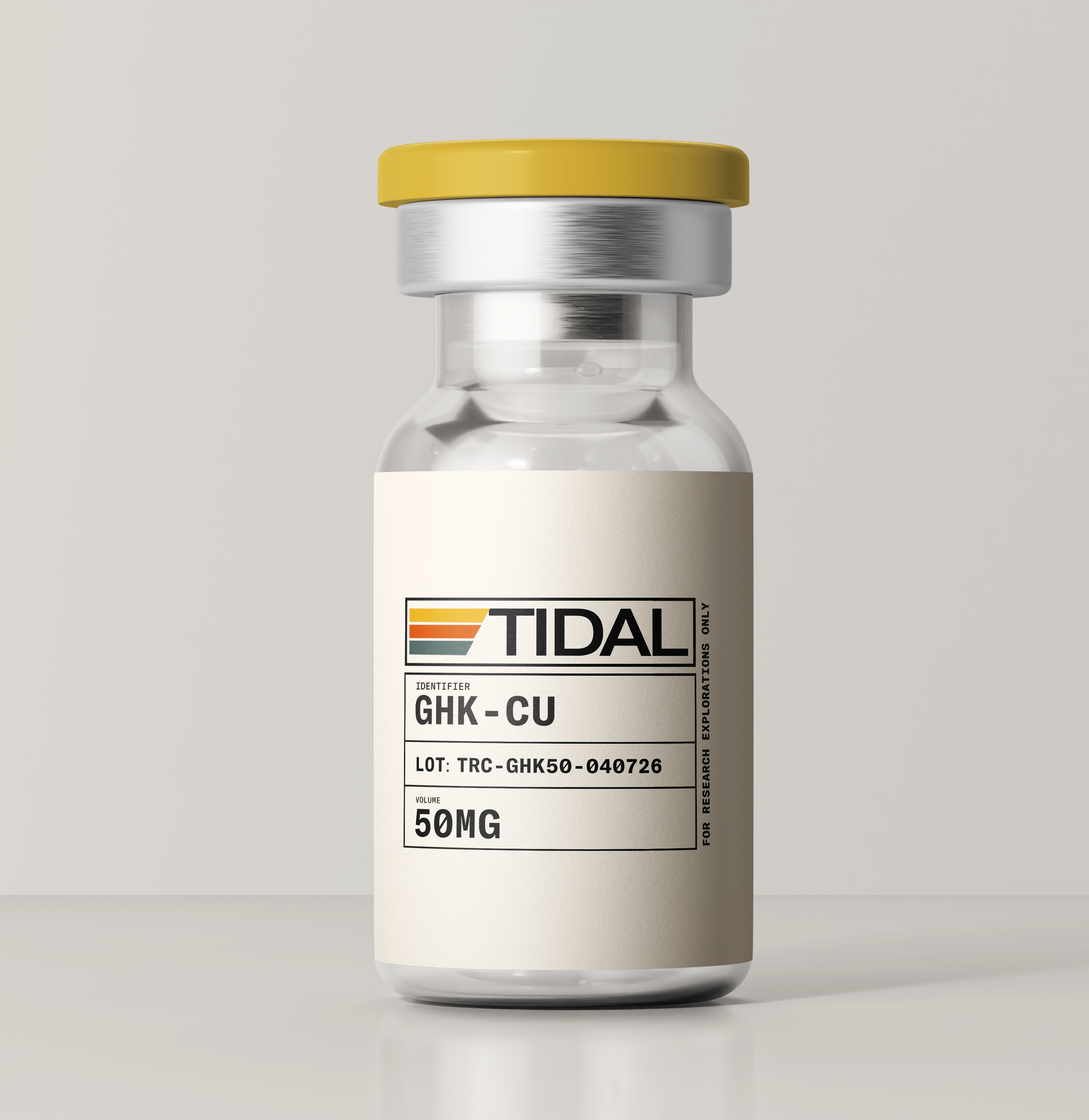 Image 2 of 3
 Image 3 of 3
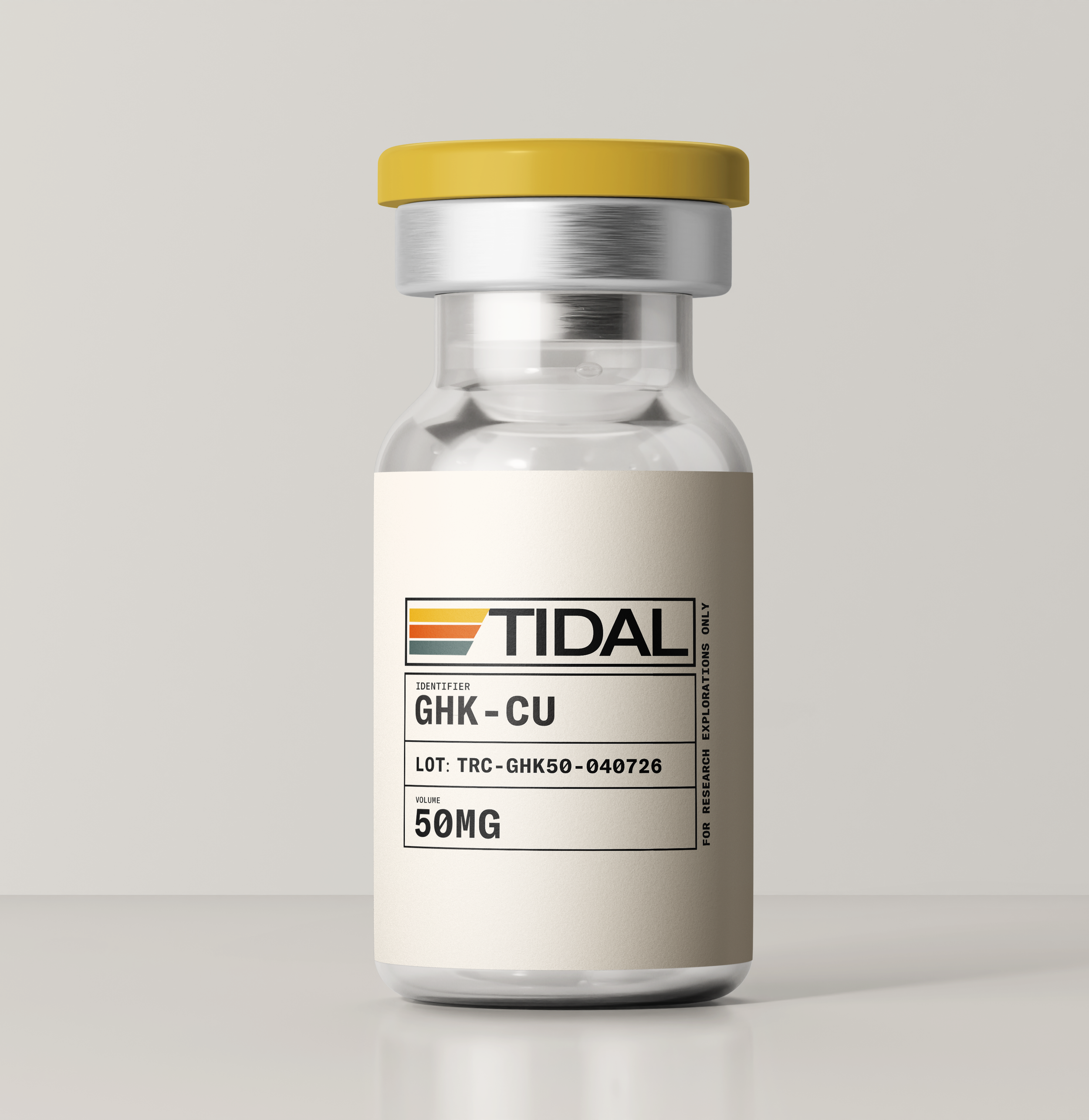
Full Name: Glycyl-L-histidyl-L-lysine:copper(II)
Also Known As: GHK-Cu, Copper tripeptide-1, Lamin
CAS Number: 49557-75-7 (GHK-Cu complex); 72957-37-0 (GHK free form)
Molecular Formula: C₁₄H₂₃CuN₆O₄ (copper complex)
Molecular Weight: 403.92 g/mol (copper complex); 340.38 g/mol (GHK free)
Amino Acid Sequence: Gly-His-Lys
PubChem CID: 73587 (GHK); 136981713 (GHK-Cu)
Appearance: Blue lyophilized powder (due to copper)
Solubility: Water-soluble
Storage: -20°C, desiccated, protected from light
GHK-Cu is a naturally occurring copper-binding tripeptide first isolated from human plasma by Pickart and Thayer in 1973. It is one of the most well-characterized peptides in the copper biology literature, with over 100 published studies examining its role in copper transport, gene expression modulation, and extracellular matrix interactions.
Research interest spans several domains: copper homeostasis and metalloprotein biochemistry, gene expression studies (GHK-Cu has been shown to affect the expression of approximately 4,000 human genes at very low concentrations in cell culture — Pickart et al., 2015), collagen and decorin synthesis in fibroblast models, and superoxide dismutase activity modulation.
GHK-Cu is widely used as a reference standard in copper peptide analytical chemistry and as a model compound for studying metal-peptide coordination chemistry. Its distinctive blue coloration (from the Cu²⁺ coordination) makes it visually identifiable during analytical work.
Pickart L, Thayer WS. (1973). "Growth-modulating human plasma factor with high affinity for a copper(II) complex." Biochem Biophys Res Commun. 54(2):562-566. PMID: 4741690
Pickart L, et al. (2015). "GHK-Cu may prevent oxidative stress in skin by regulating copper and modifying expression of dozens of extracellular matrix genes." Cosmetics. 2(3):236-247.
Kang YA, et al. (2009). "GHK-Cu modulation of gene expression and metalloprotein activity." J Aging Res. PMID: 19946594
Maquart FX, et al. (1999). "Stimulation of collagen synthesis in fibroblast cultures by the tripeptide-copper complex GHK-Cu." FEBS Lett. 238(2):343-346. PMID: 3169264
Pickart L, Margolina A. (2018). "Regenerative and protective actions of the GHK-Cu peptide in the light of the new gene data." Int J Mol Sci. 19(7):1987. PMID: 29986520
Full Name: Glycyl-L-histidyl-L-lysine:copper(II)
Also Known As: GHK-Cu, Copper tripeptide-1, Lamin
CAS Number: 49557-75-7 (GHK-Cu complex); 72957-37-0 (GHK free form)
Molecular Formula: C₁₄H₂₃CuN₆O₄ (copper complex)
Molecular Weight: 403.92 g/mol (copper complex); 340.38 g/mol (GHK free)
Amino Acid Sequence: Gly-His-Lys
PubChem CID: 73587 (GHK); 136981713 (GHK-Cu)
Appearance: Blue lyophilized powder (due to copper)
Solubility: Water-soluble
Storage: -20°C, desiccated, protected from light
GHK-Cu is a naturally occurring copper-binding tripeptide first isolated from human plasma by Pickart and Thayer in 1973. It is one of the most well-characterized peptides in the copper biology literature, with over 100 published studies examining its role in copper transport, gene expression modulation, and extracellular matrix interactions.
Research interest spans several domains: copper homeostasis and metalloprotein biochemistry, gene expression studies (GHK-Cu has been shown to affect the expression of approximately 4,000 human genes at very low concentrations in cell culture — Pickart et al., 2015), collagen and decorin synthesis in fibroblast models, and superoxide dismutase activity modulation.
GHK-Cu is widely used as a reference standard in copper peptide analytical chemistry and as a model compound for studying metal-peptide coordination chemistry. Its distinctive blue coloration (from the Cu²⁺ coordination) makes it visually identifiable during analytical work.
Pickart L, Thayer WS. (1973). "Growth-modulating human plasma factor with high affinity for a copper(II) complex." Biochem Biophys Res Commun. 54(2):562-566. PMID: 4741690
Pickart L, et al. (2015). "GHK-Cu may prevent oxidative stress in skin by regulating copper and modifying expression of dozens of extracellular matrix genes." Cosmetics. 2(3):236-247.
Kang YA, et al. (2009). "GHK-Cu modulation of gene expression and metalloprotein activity." J Aging Res. PMID: 19946594
Maquart FX, et al. (1999). "Stimulation of collagen synthesis in fibroblast cultures by the tripeptide-copper complex GHK-Cu." FEBS Lett. 238(2):343-346. PMID: 3169264
Pickart L, Margolina A. (2018). "Regenerative and protective actions of the GHK-Cu peptide in the light of the new gene data." Int J Mol Sci. 19(7):1987. PMID: 29986520