
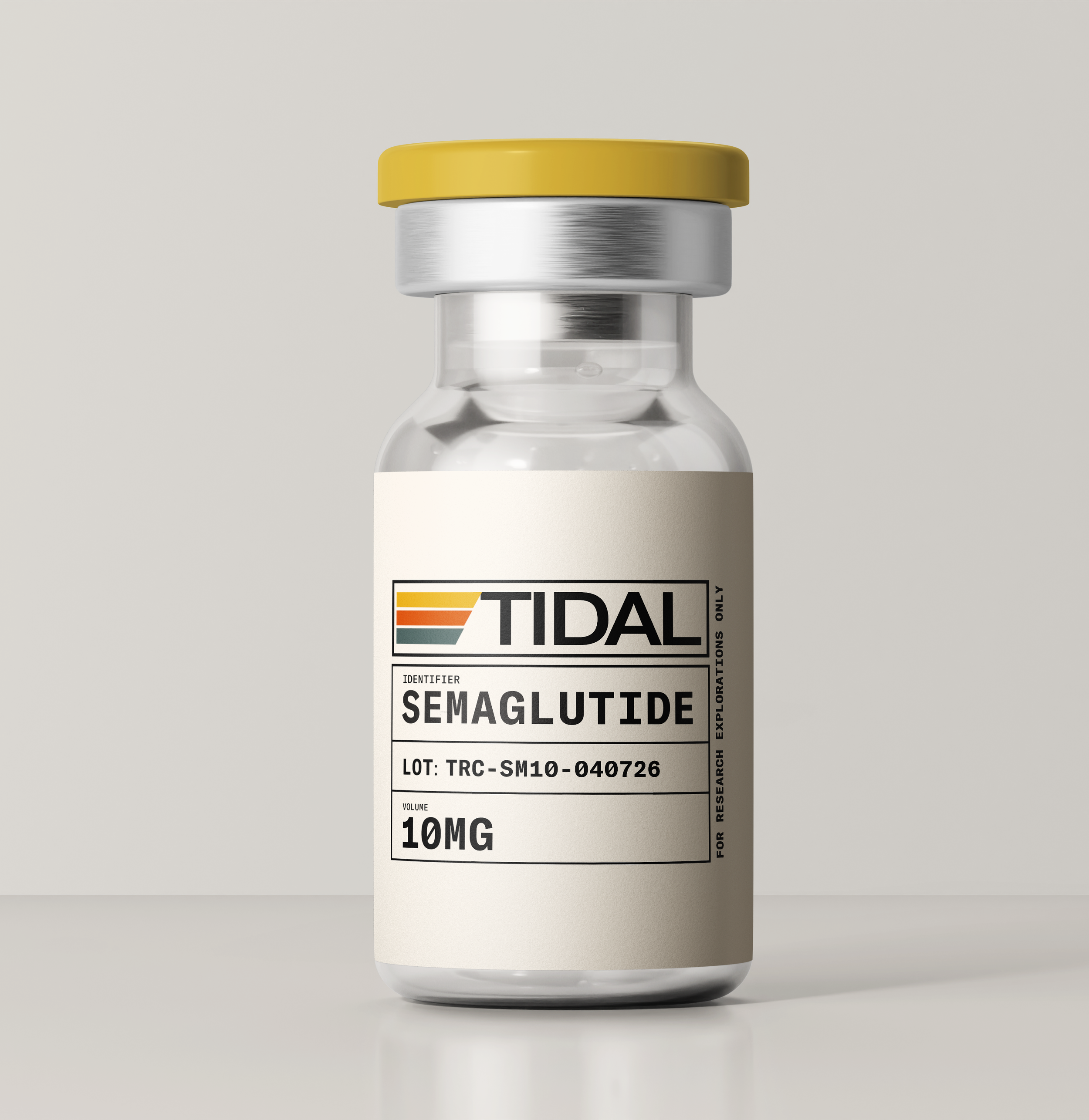
 Image 1 of 2
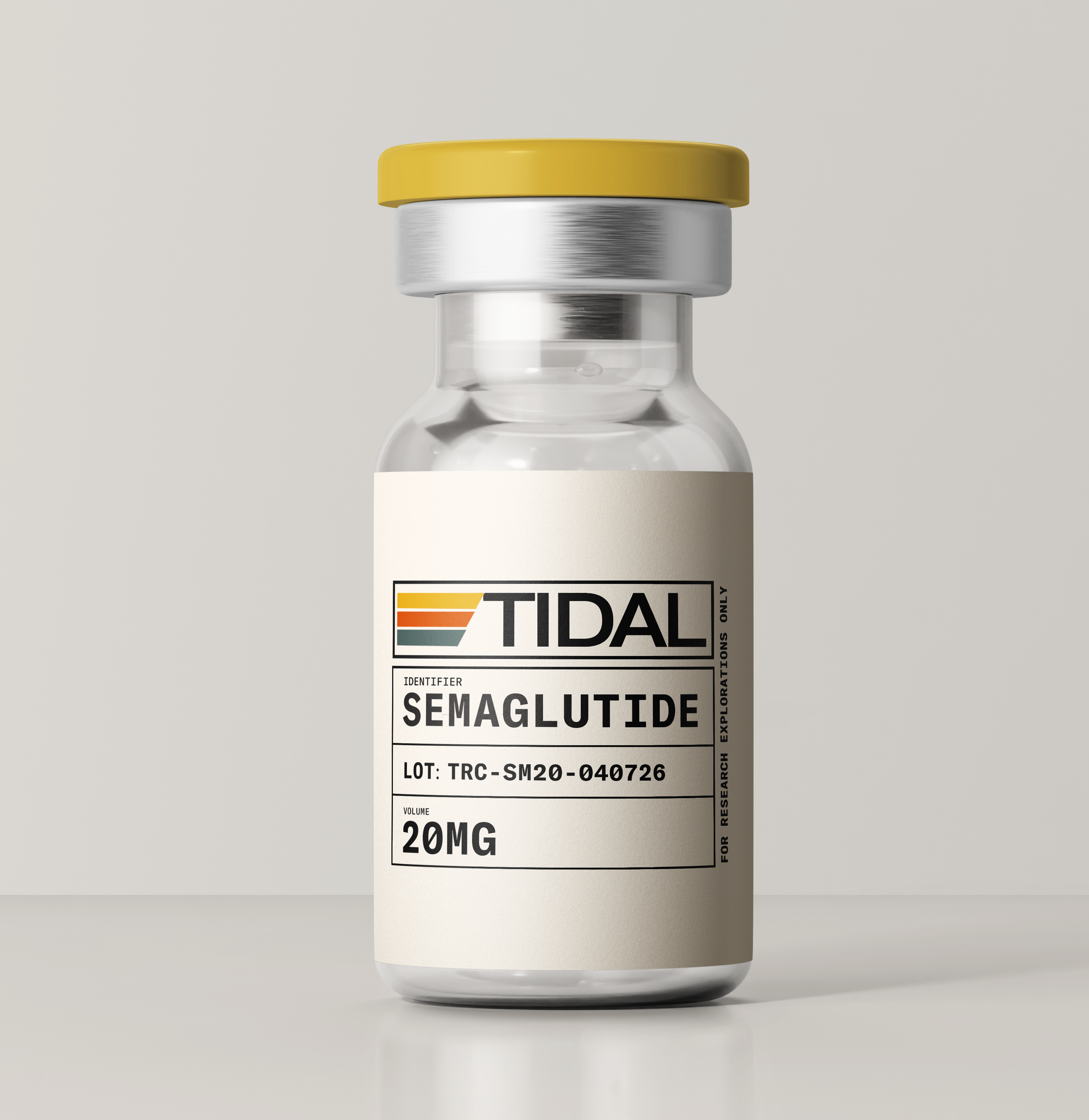 Image 2 of 2
Research Context
Semaglutide is a synthetic GLP-1 receptor agonist developed by Novo Nordisk, featuring an Aib substitution at position 8 and a C-18 fatty diacid chain conjugated via a linker at position 26. These modifications extend its half-life to approximately 7 days — a significant achievement in peptide engineering that makes it a key teaching compound for researchers studying albumin-binding strategies and peptide half-life extension.
The published literature exceeds 5,000 PubMed-indexed articles, making semaglutide one of the most extensively studied peptides in the current literature. Research interest spans GLP-1 receptor pharmacology, incretin signaling, structure-activity relationships, fatty acid conjugation chemistry, and analytical method development for long-acting peptide therapeutics.
Key References
Lau J, et al. (2015). "Discovery of the once-weekly GLP-1 receptor agonist semaglutide." J Med Chem. 58(18):7370-7380. PMID: 26308095
Marso SP, et al. (2016). "Semaglutide and cardiovascular outcomes." N Engl J Med. 375(19):1834-1844. PMID: 27633186
Wilding JPH, et al. (2021). "Once-weekly semaglutide in adults with overweight or obesity." N Engl J Med. 384(11):989-1002. PMID: 33567185