
 Image 1 of 1
Research Context
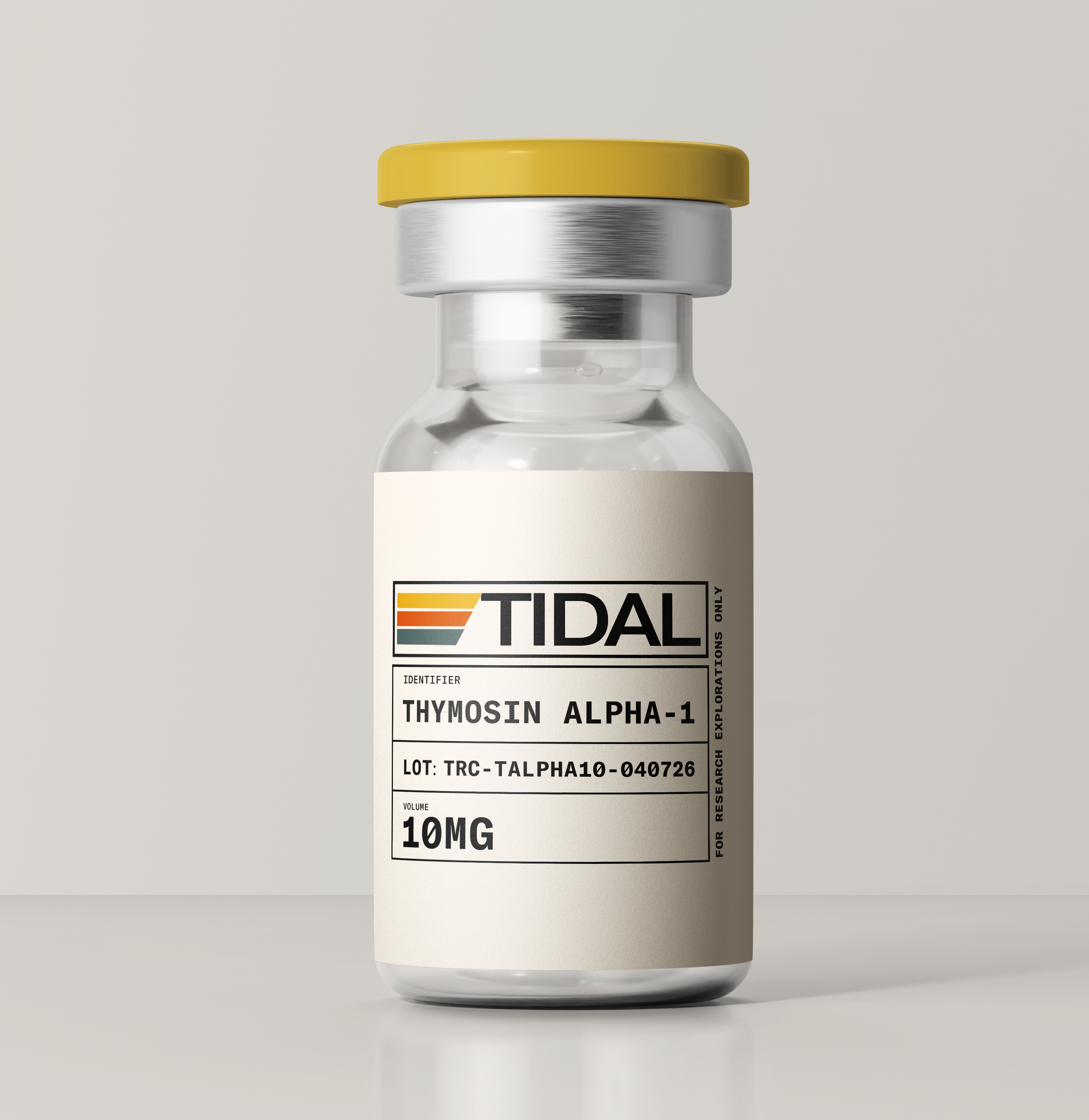
Thymosin alpha-1 is a 28-amino acid peptide originally isolated from thymosin fraction 5, a preparation derived from bovine thymus tissue by Allan Goldstein at the George Washington University in the 1970s. It was one of the earliest thymic peptides to be fully characterized and synthesized.
The published literature on thymosin alpha-1 is extensive, with over 1,000 PubMed-indexed articles. Research interest focuses on immune modulation mechanisms, dendritic cell maturation, T-cell differentiation, and Toll-like receptor signaling. It is one of the few research peptides that has been approved as a pharmaceutical product in multiple countries outside the United States (marketed as Zadaxin for hepatitis B and C).
For analytical chemistry researchers, thymosin alpha-1's well-characterized structure and extensive published pharmacokinetic data make it an excellent reference standard for method development and validation.
Key References
Goldstein AL, et al. (1977). "Thymosin alpha 1: isolation and sequence analysis of an immunologically active thymic polypeptide." Proc Natl Acad Sci USA. 74(2):725-729. PMID: 265538
Romani L, et al. (2006). "Thymosin alpha 1 activates dendritic cells." J Immunol. 176(7):4075-4082. PMID: 16547243
Tuthill C, et al. (2010). "Thymosin alpha 1 — past clinical experience and future promise." Ann NY Acad Sci. 1194:130-135. PMID: 20536460
Costantini C, et al. (2019). "A reappraisal of thymosin alpha 1 in cancer therapy." Front Oncol. 9:873. PMID: 31552181
King R, Tuthill C. (2016). "Immune modulation with thymosin alpha 1 treatment." Vitam Horm. 102:151-178. PMID: 27450734